

Disclaimer
To protect the privacy, dignity, and safety of the individuals featured on this page, some names and identifying details have been changed. The stories shared remain true and are presented with full respect for the lived experiences of the victims and survivors. Any use of pseudonyms is solely for security and confidentiality purposes.
Success Stories

Roshni’s Journey Through Education
Girls born into poverty in marginalized communities often face limited choices and early pressure to leave home in search of work. Many never return.
Roshni was one of those girls. Born into a marginalized tribe and raised in deep poverty, her family struggled to meet basic needs. As a teenager, she was encouraged to seek work across the border, a path that places countless young girls at risk of exploitation.
Instead, Roshni was welcomed into Manasseh House, a safe home providing protection, stability, and access to education for vulnerable girls.
What followed was remarkable.
Roshni excelled academically, completing high school at the top of her class. Her dedication and ability earned her a full scholarship to study Health and Science at a leading college in Kathmandu. Her pursuit of education did not stop there.
She later received another full scholarship to continue her studies abroad, becoming one of the first from her village to access such an opportunity. Her journey from vulnerability to academic excellence demonstrates what becomes possible when protection, education, and belief intersect.
Roshni’s story is a reminder that education is not only prevention but transformation, opening doors that once seemed unreachable and redefining what the future can hold for girls at risk.

Kiran
Her words left us in tears.
At sixteen, most girls dream about friends, school, and what the future might hold. For Kiran, the future was taken before it ever began. Her father left for work abroad, and no one knows where he is now. Her mother remarried and disappeared into a new life.
That left Kiran with no home, no guidance, and no safe place to belong.
When a woman she called her aunt promised her work in India, Kiran believed this might be her chance to find a way forward.
But promises can be cruel. The woman’s intentions were far from honest, and soon Kiran was trapped in a reality nothing like what she had been told. That woman now sits in prison, alongside the man connected to a supposed marriage arrangement that never should have existed.
By the time our team found her in India, Kiran was alone. She explained quietly that she had gone to India to work. Instead, she was met with exploitation and betrayal.
When her paternal uncle was contacted, he came to take her home.
But home, for Kiran, no longer existed. With tears in her eyes, she spoke words that pierced the hearts of everyone in the room:
“I have nowhere in the hills and nowhere in India too.”
Imagine the weight of those words, spoken by a sixteen year old girl. No anchor. No family. No place that felt safe.
Yet within her, there was a flicker of hope. Kiran shared her desire to remain in the shelter home, where she felt safe and could imagine returning to school, rebuilding her life, and creating a future of her own choosing.
Her uncle took her that day, but the story does not end there. The organization remains in close contact with her, working to honour her wish for stability, safety, and education. Her case is still active, her future still uncertain, and her story still being written.
Girls like Kiran stand at the edge between despair and possibility. With continued support, her next chapter can be one of safety, education, and opportunity rather than abandonment and fear.
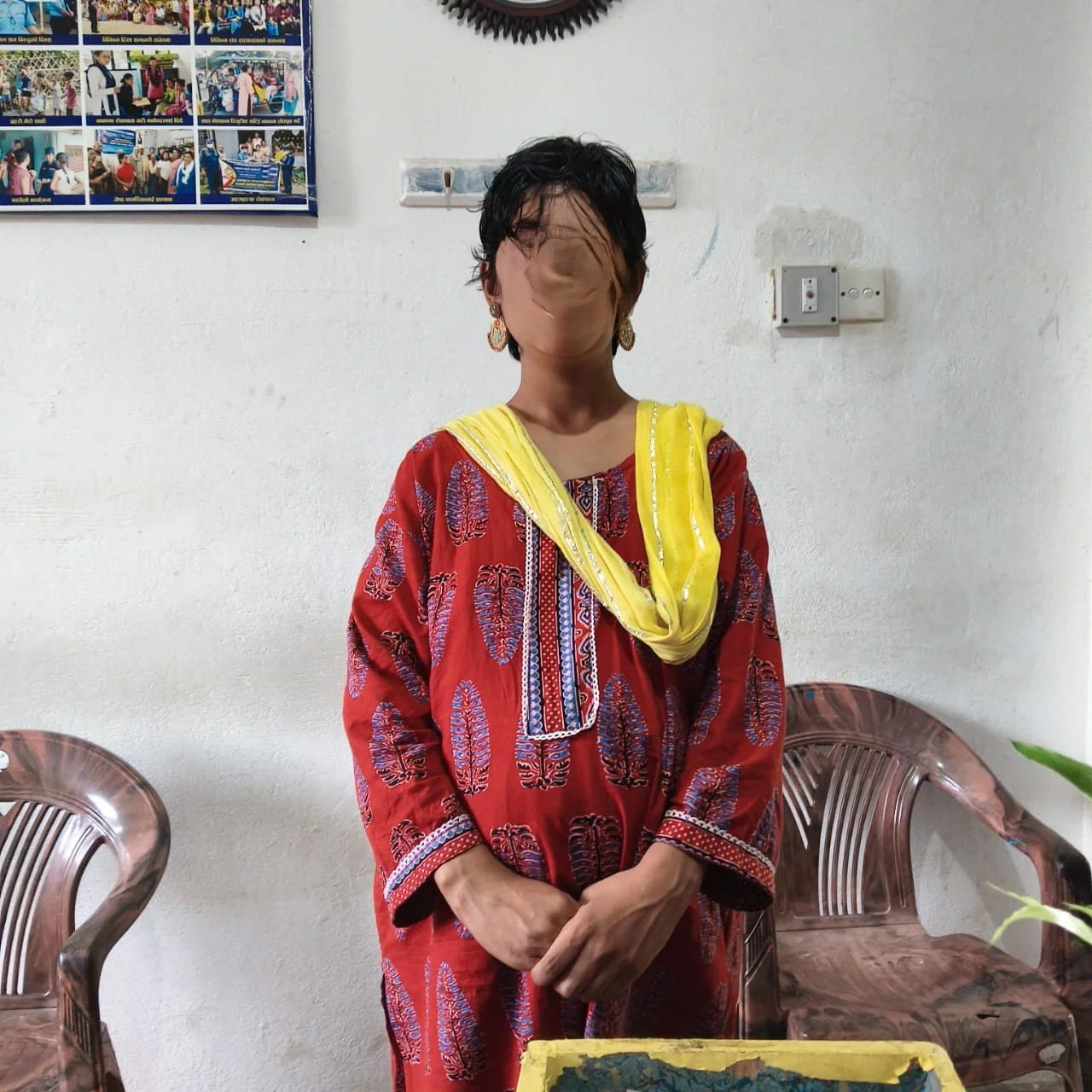
Anita K.
Anita K. disappeared from her home in Palpa after a childhood marked by instability, rejection, and the absence of protection. With no safety net, she slipped out of sight and remained missing for years.
Her story later surfaced across the border in India. Autistic and unable to clearly explain how she arrived there, Anita was exploited, left pregnant, and eventually abandoned on the streets. Vulnerable and alone, she faced circumstances no one should ever endure.
Through the intervention of an Indian organization and coordinated cross border collaboration, Alliance Foundation International, NAN, and OCMC stepped in to secure her safety. Anita was brought into protective care, where she began receiving medical treatment, psychosocial support, and long term case management.
While under care, Anita gave birth to a healthy baby boy. Both mother and child continue to receive medical attention, counselling, and protection. Anita has also been reconnected with family members she had not seen for many years.
Her journey is still unfolding, but she is no longer invisible. Anita’s story reflects the critical importance of vigilance, partnership, and sustained care in restoring dignity, protecting life, and creating space for healing and hope.